
How preparation, timing, and the right movers can make a complicated move feel manageable
There’s a moment before every move when the excitement gives way to reality.
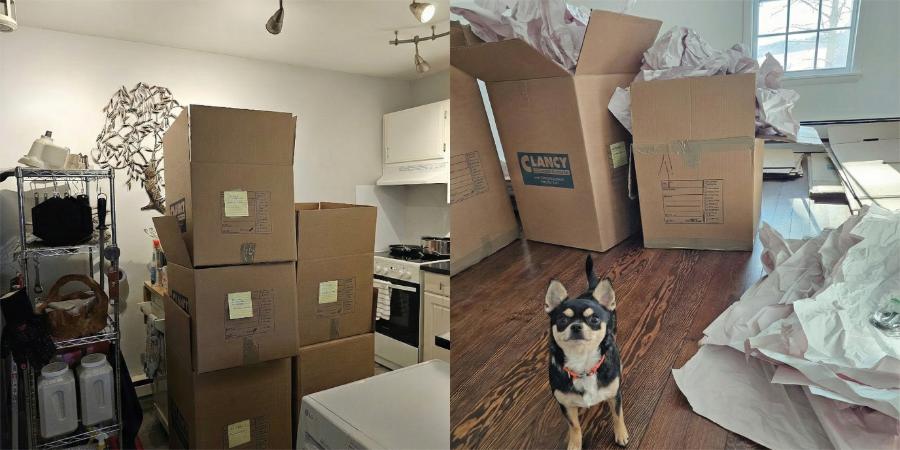
For me, it happened standing in my condo, looking at boxes stacked against the walls, knowing that in just a few days everything I owned would need to make its way down two long flights of stairs and somehow arrive safely at a 1926 farmhouse, my dream home, that came with its own history, quirks, and unknowns.
There was a lot riding on getting it right. Family. Professional reputation. All of it.
That was the buildup to my moving day.
Not the truck.
Not the keys.
The lead-up.
Why What You Do Before Moving Day Matters Most
I’m a planner by nature. And having worked in the moving industry, including more than 15 years with Clancy, I’ve been around enough moves to know that what happens before moving day often matters more than what happens during it.
This move was also deeply personal. I had not moved for myself in 21 years. I had lived in that condo since 2004, back when I barely had enough to fill the space and once used a box as a TV stand. Over time, that home filled up slowly and meaningfully.
Leaving it was not just about logistics. It was about closing a long chapter of my life.
Weeks ahead of time, I focused on preparation that many people underestimate:
- Decluttering room by room instead of packing everything blindly
- Separating true move-day essentials from items that could stay packed longer
- Labeling boxes by room and priority, not just contents
- Making intentional decisions about what would not move
None of this was exciting, but it created clarity. And clarity lowers stress.
Still, there were moments when the pace of it all felt faster than I was ready for.
How to Decide Whether to Hire Movers or Do It Yourself
At some point in planning a move, everyone asks the same question.
Can we do this ourselves?
There’s a popular joke that once you’re over a certain age, you don’t get moves for pizza and beer anymore. No one wants to slip a disc carrying a sofa down a flight of stairs for a couple of slices and a six-pack.
It’s funny because it’s true.
For us, the reality behind that joke mattered. Between my spouse and I, and the friends we could realistically ask for help, there are bad backs, old injuries, and limits we’re no longer interested in testing. We’re past the stage of life where calling in favors for heavy lifting feels reasonable or fair.
At the same time, we’re still perfectly capable of doing parts of the work ourselves. Packing thoughtfully. Sorting. Labeling. Making decisions about what stays and what goes.
That balance mattered.
I chose not to do the move myself.
I chose not to enlist family or friends for the heavy lifting.
And I chose not to hire uninsured labor.
I needed professionals for the physically demanding, high-risk parts of the move, while still being hands-on where it made sense.
That decision shaped everything that followed, including how calm moving day felt.
Why Lead Time Changes the Entire Experience
One of the most important decisions I made happened early.
As soon as I had a reasonable sense of when my closing date might be, I reached out to schedule the movers. I didn’t have a firm date yet, but I had a window, and that was enough to start the conversation.
I happened to be moving in a slower season, when movers tend to have more availability. That helped. If I had been moving long-distance or out of state, I would have reached out even sooner to make sure availability wasn’t an issue.
I know not everyone gets the luxury of knowing far in advance when they need to move. Closings shift. Timelines change. Sometimes things come together quickly. I get it. Movers get it too.
But whenever you can give more lead time, it almost always leads to a better experience. Less stress. Fewer surprises. More support.
Having that runway meant I wasn’t just booking a truck and a crew. I had access to guidance along the way. In the days leading up to my move, one of my move coordination team members checked in with a simple, “How’s packing going?” When I mentioned I was struggling to get a few last items packed before move-out day, the movers showed up with extra boxes to help close the gap.
That kind of support doesn’t happen when everything is rushed. It happens when there’s time to plan, communicate, and adjust.
How to Plan for a Gap Between Move-Out and Move-In
Our move-out day and move-in day did not line up because of the closing, which meant we had a short gap where we needed to stay with family for two nights. We could have stayed at a local hotel, but we were grateful that family had the room and offered.
This was another moment where having experienced movers mattered. There was no stress about what would happen to our belongings during that in-between period. Keeping everything on the truck was no problem, and I knew that bringing items into the warehouse would have been an option if it were needed.
Knowing those logistics were already handled removed an entire layer of worry.
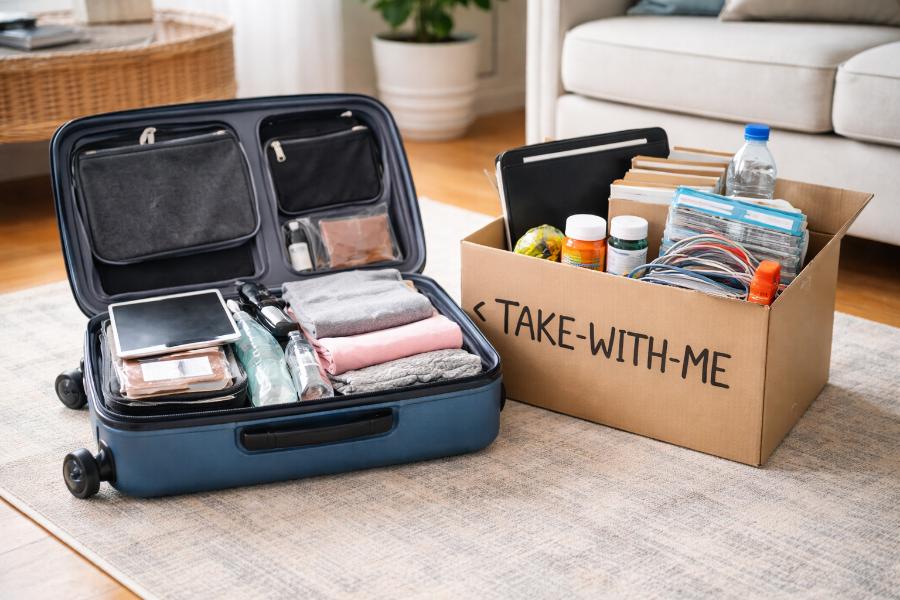
We packed a dedicated “take with me” box and kept it in our car, along with a suitcase full of daily needs and our favorite snacks. That box held the things we knew we would need immediately and did not want to hunt for later.
It also followed long-standing moving industry guidance to keep certain irreplaceable or daily-use items with you rather than on the truck. Important documents, chargers, medications, and anything needed for the closing stayed in our possession. In our case, that included my marriage certificate showing my name change, which our attorney’s office needed as part of the closing process.
Just as important, we made a conscious effort to keep our daily routines as normal as possible. Mealtimes stayed the same. Bedtimes stayed the same. Familiar habits helped everyone adjust, including us.
What Goes First: What to Do Before Movers Arrive
On move-out day, one of the first things we did had nothing to do with boxes.
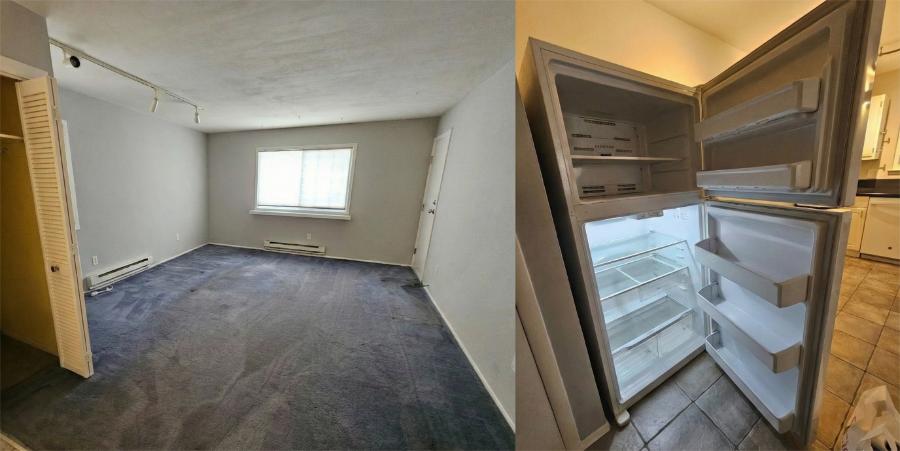
We gathered all the remaining food from the refrigerator, packed it into the car with my family, and sent them off to my in-laws before the movers arrived. It wasn’t just about logistics. It was about creating a safe, focused environment for everyone involved.
With no little hands or feet underfoot, the movers could work efficiently without worrying about someone getting in the way. And I could stay available to answer questions without being pulled in multiple directions.
That decision set the tone for the entire day. It made the move safer, smoother, and far less stressful for everyone.
What Goes Last: Leaving Your Home “Broom Clean”
Because my condo needed to be left “broom clean” per my sale contract, one of the very last items loaded onto the truck was my trusty vacuum, along with my Swiffers. As the crew leader gathered paperwork for me to review, I did one final pass through the space, swept up dust bunnies, and grabbed my trash bag.
✅ No trash left behind, check.
✅ Nothing left behind that was not agreed to be left behind, check.
I’ll admit there was a slight tear in my eye at how quickly the move-out happened. I was barely ready emotionally, even though I was prepared logistically.
New Things I Learned About Preparing for Moving Day
Before the last box was loaded, a few lessons were already clear:
- A complicated move does not have to feel complicated
- Preparation reduces stress, but trust completes it
- The right movers anticipate problems before you notice them
- Feeling calm on moving day is not luck. It is the result of experience
And I Saw My Furniture in a Whole New Light (Literally)
As furniture was being wrapped and brought out, the move crew leader pointed out a significant crack in a table. It wasn’t new damage. They simply wanted to make sure I saw it.
Standing there, seeing my furniture in brighter light and from angles I’d never really noticed before, I had a quiet realization. Some of my furniture already had wear. A few dings. A little character. Inside my condo, in familiar lighting and familiar spaces, I hadn’t seen it the same way.
The movers weren’t surprised by my reaction at all. They said it was common. What we see indoors often looks different once it’s outside.
It wasn’t damaged from the move.
It was pre-existing wear that I simply hadn’t noticed before.
I was actually glad they pointed it out. It meant there was no question later about what was already there and what wasn’t. That kind of transparency builds trust in a quiet way, and it reinforced that the crew was paying attention to details I might have missed myself.
I’ve known this professionally for years. Living it personally reinforced just how important it is.
The right preparation makes a move manageable.
The right movers make it feel effortless, even when it isn’t.