How much does it cost to move an office? Most businesses should plan on a few thousand dollars for smaller spaces (often $1,000 to $5,000) and $30,000+ for large or complex relocations, with many budgets starting from a per-square-foot estimate and adjusting for labor, distance, IT complexity, and furniture volume.
Still, your actual total depends on your inventory, building access, timing, and services.
PRICING DISCLAIMER
The pricing ranges and examples in this article are general estimates for informational purposes only. Actual office moving costs vary based on factors like inventory volume, labor time, distance, building access requirements, move timing, IT complexity, and service needs (packing, disassembly/reassembly, storage, specialty handling). To receive accurate pricing for your move, request a walkthrough-based quote from Clancy Relocation & Logistics based on your specific scope and site conditions.
On This Page
Key Points✔ Small office moves often run $1K–$5K; large or complex relocations can exceed $30K. ✔ Labor hours drive cost, especially with elevators, long carries, and loading limits. ✔ Furniture movers add time for cubicles, modular systems, and reassembly. ✔ IT relocation can be a major line item due to labeling, racks, and cutover needs. ✔ Budget accurately by scoping inventory, services, constraints, then comparing business moving company quotes. |
What Counts as an “Office Move” (and What’s Usually Included)
An office move is more than transporting desks from Point A to Point B. For most businesses, “moving office” includes a mix of logistics, furniture handling, and coordination with building management.
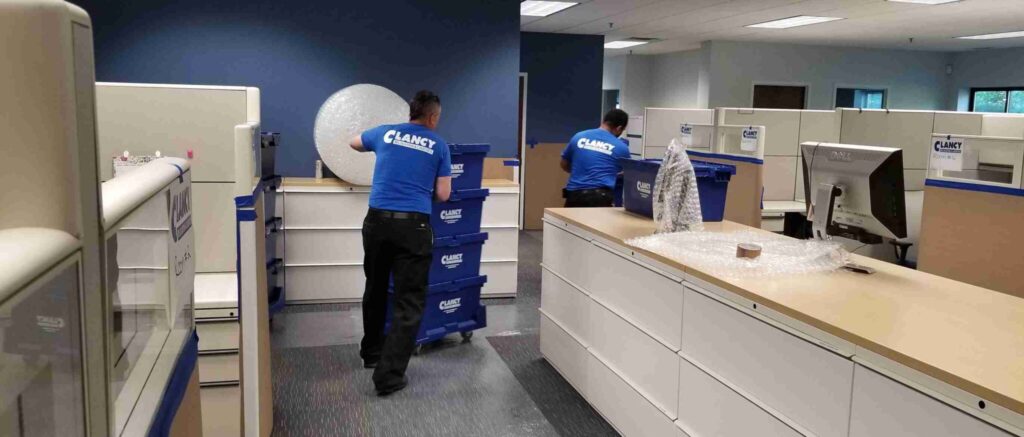
Typical office relocation movers scope usually includes:
- Pre-move walkthrough and logistics plan (loading zones, elevator reservations, staging areas).
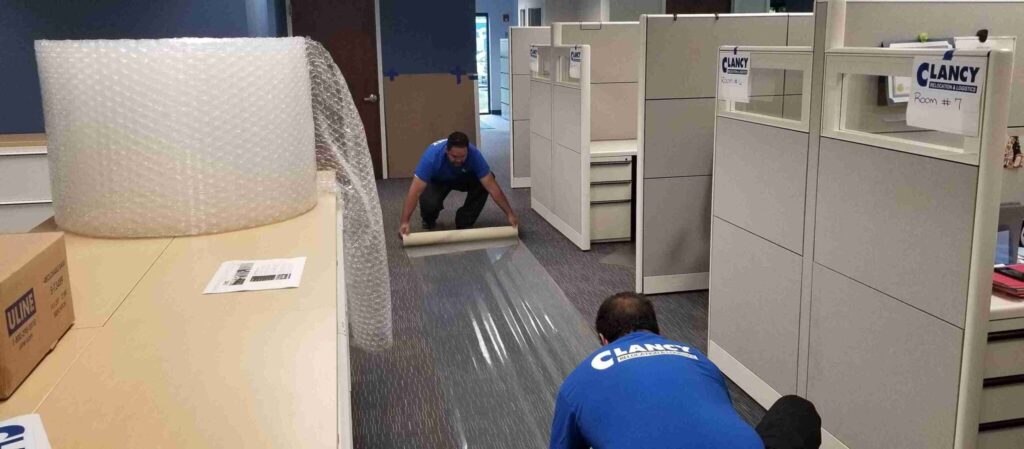
- Basic protection and handling (pads, dollies, carts, floor protection).
- Loading, transport, and unloading.
- Placement of major items into offices, work areas, and conference rooms.
The Biggest Cost Drivers (Why Two Offices the Same Size Can Price Differently)
Office Size and Density (Sq Ft Plus How Full It Is)
What It Affects
Total labor time, truck space, packing needs, and how many trips or trucks you’ll need.
How It Shows Up on Quotes
More workstations, full file cabinets, storage rooms, and conference areas typically increase labor hours and materials. A dense 3,000 sq ft space can cost more than a lightly furnished 5,000 sq ft space because it takes longer to pack, move, and place.
Distance and Route Complexity
What It Affects
Drive time, fuel, crew scheduling, and whether staging is needed.
How It Shows Up on Quotes
Local CT moves often price around labor and logistics efficiency:
- Multi-state relocations typically add line items for travel, longer load and unload windows, and potential overnight constraints.
- Route factors like tolls, limited truck access, or long carries from loading zone to suite can increase time-based charges.
Labor Hours and Crew Size
What It Affects
The single biggest driver for many office relocation movers because labor time multiplies quickly across a crew.
How It Shows Up on Quotes
Higher labor hours when your move includes:
- Long carries from office to truck
- Elevator waits and reserved time windows
- Union rules or COI requirements tied to certain buildings
- Limited loading zones or dock scheduling that forces stop-and-go work
Furniture Volume and Complexity (Where Furniture Movers Matter)
What It Affects
Disassembly, protection, handling time, and reassembly accuracy.
How It Shows Up on Quotes
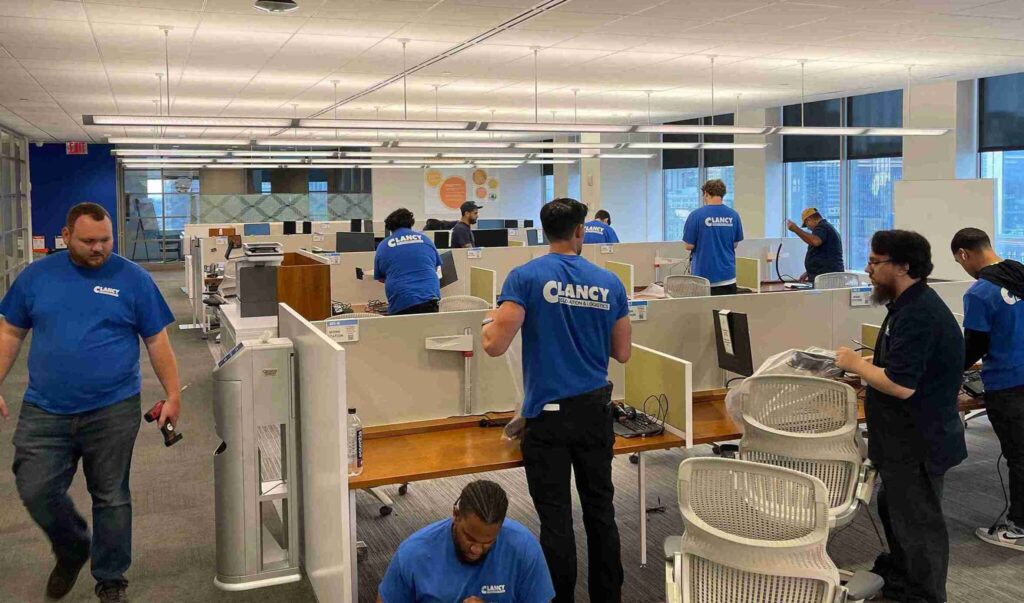
Modular systems, cubicles, conference tables, and specialty fixtures often require trained furniture movers, hardware control, and floorplan-based placement. More parts and more reassembly steps usually means more labor and sometimes a dedicated install crew.
IT and Low-Voltage Complexity (Often Underestimated)
What It Affects
Cutover timing, chain-of-custody handling, and how fast employees can work after move-in.
How It Shows Up on Quotes
IT can appear as separate labor, special handling, or coordination fees for:
- Servers and racks
- Cable management and labeling
- Secure transport procedures and chain-of-custody handling
Note: IT-related relocation costs vary widely and are often a meaningful line item in office moves, especially for businesses with network closets, on-site servers, or compliance-driven handling.
Timeline Constraints (After-Hours, Weekends, Phased Moves)
What It Affects
Staffing plans, scheduling complexity, and how quickly you can return to normal operations.
How It Shows Up on Quotes
Faster timelines can require more labor, more trucks, or specialized sequencing. Phased moves can reduce downtime but may increase total handling because items move in multiple waves.
Building Access and Rules (Especially Relevant in CT Cities)
What It Affects
Move-day efficiency and the risk of paid delays tied to building operations.
How It Shows Up on Quotes
Professional office movers often account for:
- Parking constraints in Hartford, Stamford, and New Haven
- Loading dock schedules and strict reservation windows
- Elevator reservations and capacity limits
- Downtown traffic windows that restrict truck arrival times
Office Moving Cost Breakdown by Category (What You’re Actually Paying For)
Core Mover Fees (Labor Plus Truck Plus Equipment)
What It Includes
The baseline cost to physically move your office from one location to another.
Common Line Items on Quotes
- Crew labor (loading, transport, unloading, placement)
- Truck and travel time
- Equipment: dollies, pads, carts
- Floor protection and basic safeguarding materials
Packing Labor Plus Packing Supplies
What It Includes
Time and materials to prepare items for transport, often with a labeling system tied to departments or a floorplan.
Common Line Items on Quotes
- Labor to pack and label
- Boxes or crates and tape
- Labeling systems for rooms and departments
- Anti-static materials for electronics when needed
Furniture Disassembly and Reassembly
What It Includes
Breaking down and rebuilding furniture that cannot move safely as-is.
Common Line Items on Quotes
- Cubicles and modular stations
- Wall-mounted items and fixtures
- Conference rooms and large tables
If installers or specialized furniture movers are required, this may be priced separately from basic moving labor.
IT Relocation Support and Coordination
What It Includes
Move-related handling and coordination of tech assets, typically alongside internal IT or third-party vendors.
Common Line Items on Quotes
- Disconnect and reconnect planning
- Labeling and device mapping
- Phased cutover support to reduce downtime
Even when IT is not physically moved by the crew, office relocation movers may budget for scheduled access windows and careful handling.
Specialty Handling (If Applicable)
What It Includes
Higher-effort or higher-risk items that require extra labor, equipment, or special procedures.
Common Line Items on Quotes
- File rooms and sensitive records
- Heavy or awkward items like copiers and safes
- Raised-floor environments or tight equipment rooms
Storage (Short-Term Or Project Staging)
What It Includes
Holding items temporarily when move timing, renovations, or space constraints require staged delivery.
Common Line Items on Quotes
- Receiving and inventorying
- Vaulting or racked storage
- Redelivery scheduling and handling
Trusted movers like Clancy Relocation & Logistics offer climate-controlled warehouse storage, which can help protect sensitive items like paper records, electronics, and certain furniture materials from temperature swings and moisture.
Indirect Costs: Downtime and Productivity Loss
What It Includes
Business impacts that do not appear on the mover invoice but still affect the total cost of moving office.
Common Line Items on Quotes
Downtime typically is not billed as a line item by office relocation movers, but it should still be budgeted internally. Common drivers include:
- Employee time spent packing and unpacking
- Delays waiting for internet, phones, or system access
- Productivity loss during setup, troubleshooting, and reorientation
Quick Estimating Method (Steps to Build a Budget Before you Request Quotes)
Before you call professional office movers, build a simple budget framework so quotes are easier to compare. The goal is not to “guess the exact price,” but to define scope, identify constraints, and separate must-haves from add-ons.
Step 1: Measure Your Move Size (Square Feet Plus Inventory)
Start with square footage, then list what’s actually moving:
- Workstations and chairs
- Storage cabinets and file rooms
- Conference rooms and reception areas
- Printers, copiers, IT closets
Step 2: List Service Needs (Movers vs Internal Team)
Write down what you want your business moving company to handle:
- Packing and labeling
- Furniture disassembly and reassembly
- Crating for sensitive items
- Staging or climate-controlled storage
Step 3: Identify Building Constraints at Both Locations
Note anything that can slow the move:
- Elevator reservations and time limits
- Loading dock hours
- Parking and long carries
- Certificate of insurance requirements
Step 4: Choose a Downtime Strategy
Decide how you’ll keep operating:
- One-day move with after-hours setup
- Phased move by department
- Weekend move with Monday readiness testing
Step 5: Build a Three-Bucket Budget
Set up three buckets so you can separate essentials from extras:
- Core move costs: Movers, trucks, equipment, basic handling
- Add-on services: Packing, furniture movers, specialty handling, storage
- Buffer: 10% to 20% contingency for delays and surprises
Key Things to Look for in an Office Mover
The right business moving company should reduce downtime, protect assets, and coordinate logistics clearly. When comparing professional office movers, focus on these essentials:
- Commercial move experience: Look for office relocation movers with proven experience handling business moving projects, not just residential moves.
- Clear scope and documentation: Detailed inventories, labeled floorplans, and written scopes help prevent confusion and added costs.
- Furniture handling capability: Confirm they have trained furniture movers for cubicles, modular systems, and conference rooms.
- IT and coordination awareness: Even if your internal team manages IT, the mover should understand disconnect timing, labeling, and access requirements.
- Building compliance knowledge: Familiarity with COIs, elevator reservations, loading docks, and downtown access rules avoids delays.
Frequently Asked Questions (FAQs)
How do you calculate how much it will cost to move?
To calculate office moving costs, start with square footage and inventory, then factor in distance, labor hours, furniture volume, IT complexity, and services like packing or storage. Professional office movers often estimate costs using labor time plus services.
What are the hidden costs of moving?
Hidden costs in business moving often include downtime, lost productivity, IT delays, furniture reconfiguration, elevator wait times, and building access restrictions. Office relocation movers may not bill these directly, but they still affect the total cost of moving office operations back to full capacity.
What are reasonable relocation costs?
Reasonable relocation costs depend on scope and scale. For context, HomeAdvisor reports that a local move usually costs between $880 and $2,570, based on truck rental and two professional movers. Contact movers like Clancy Relocation & Logistics for more accurate estimates.
How long does it take to relocate an office?
A small office may relocate in one day, while mid-size and larger offices often take several days or occur in phases. Timeline depends on furniture volume, IT setup, building rules, and whether professional office movers are working after hours or on weekends to reduce disruption.
How much can I write off for office expenses?
For home office deductions, the prescribed rate is $5 per square foot with a maximum of 300 square feet. For example, a 150-square-foot office allows a $750 deduction if the space is dedicated to business activities.
Plan Your Office Move With Confidence Today
Office moving costs usually come down to three things: what you’re moving, what your buildings allow, and how much coordination is required to keep operations running.
If you’re moving to an office in Connecticut and want a walkthrough-based estimate that reflects your actual floor plan, furniture volume, and timeline, Clancy Relocation & Logistics can scope the move in detail and coordinate the moving parts.
Get a moving quote from us today.